Most couples don't struggle because they have problems. They struggle because they don't have a shared way to talk about those problems.
When we're hurt, frustrated, or overwhelmed, it's easy to jump straight to blame, mind reading, or defending ourselves. We start talking about the other person's intentions instead of our own experience. That's usually when the conversation goes sideways.
The Feedback Wheel offers a different approach.
It's not a script. It's not about being robotic or overly careful with your words. It's simply a structure that helps you communicate your experience in a way that's easier for another person to hear.
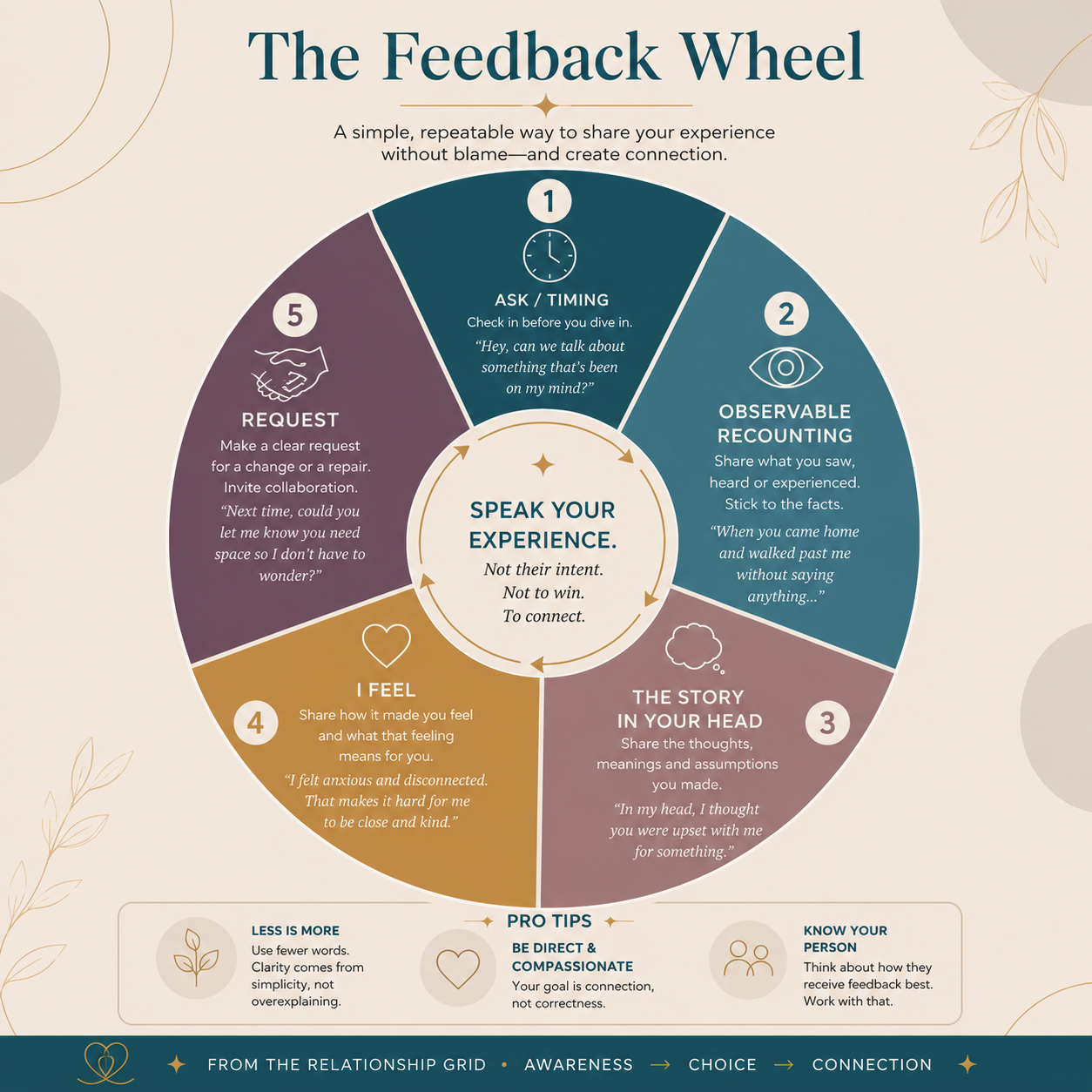
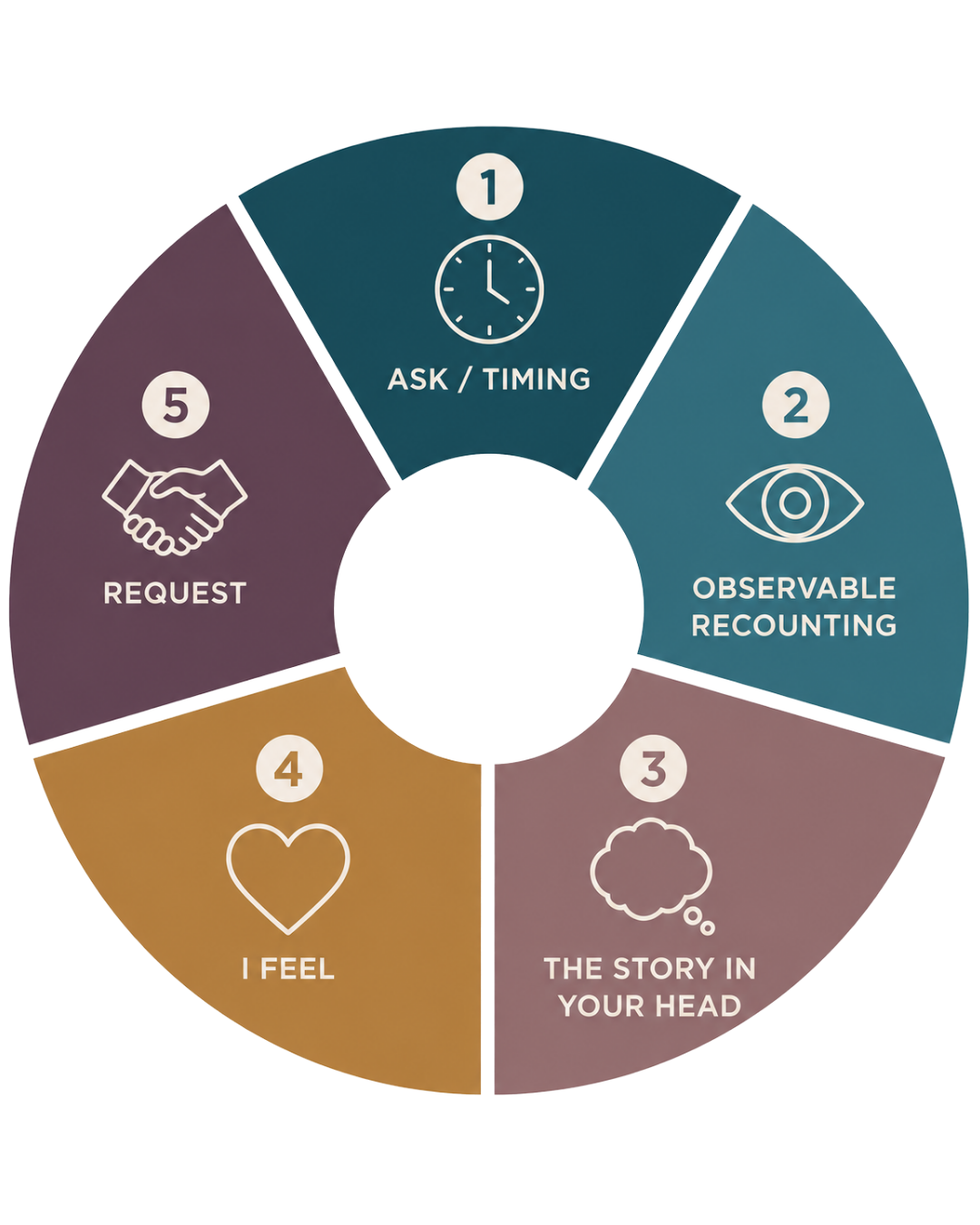
The five parts are simple:

1. Ask First
Before launching into feedback, check whether the other person has the capacity to receive it. Timing matters. A conversation that starts with consent tends to go much better than one that starts with an ambush.

2. Share What Happened
Stick to what you observed. What did you see, hear, or experience? Try to leave assumptions and interpretations out of this step.

3. Name the Story in Your Head
This is where you separate facts from meaning. Most conflict happens when we treat our interpretations as reality. Sharing the story allows your partner to understand what happened inside of you without having to agree that your story is true.

4. Share Your Feelings
Go beyond anger if you can. Often, underneath irritation is disappointment, fear, sadness, loneliness, embarrassment, or uncertainty.

5. Make a Request
Feedback works best when it gives the relationship somewhere to go. What would help next time? What repair are you hoping for? What would feel different?
If you've read my work on the Relationship Grid, you'll notice something familiar here.
The Feedback Wheel is really an exercise in moving toward the Wise Adult. Instead of reacting from the part of us that wants to attack, defend, withdraw, or prove a point, we're slowing down enough to notice our experience and communicate it clearly.
The goal isn't to be right. The goal is connection.
A few reminders before you try it:
Less is usually more.
You don't need a twenty-minute explanation for every feeling.
Be direct and kind at the same time.
Your request is an invitation, not a demand.
The person you're talking to may not agree with your interpretation, and that's okay.
The Feedback Wheel doesn't guarantee that every conversation will go well. It does increase the chances that both people leave the conversation feeling understood instead of defeated. And that's often a pretty good place to start.